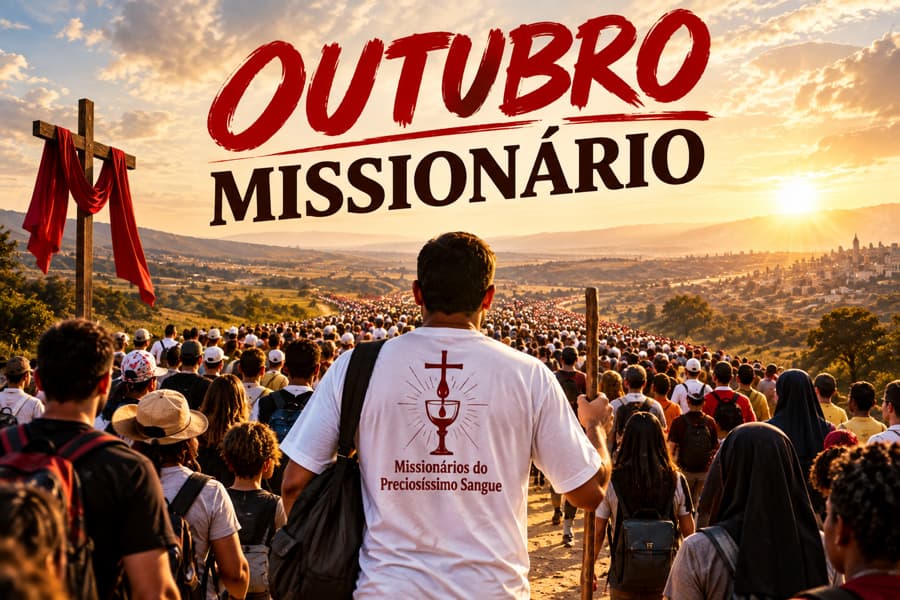
26th Missionary Day
The Cross, on which the glorious face of the Risen One already shines, introduces us to the fullness of Christian life and the perfection of love, because it reveals God's will to share his life, his love, and his holiness with humanity. From this mystery, the Church, remembering the Lord's words: “Be perfect, therefore, as your heavenly Father is perfect” (cf. Mt (5, 48), he understands more and more that his mission would be meaningless if it did not lead to the fullness of Christian existence, that is, to the perfection of love and holiness. Through contemplation of the Cross we learn to live in humility and forgiveness, in peace and communion.

From the Cross, Jesus indicates the conditions for being able to practice forgiveness. To the hatred with which his persecutors had nailed him to the Cross, he responds by praying for them. He not only forgives them, but continues to love them, to desire their good, and therefore intercedes for them. His death becomes the true and proper fulfillment of Love.
Faced with the great mystery of the Cross, we cannot help but prostrate ourselves in adoration: “To transmit to man the face of the Father, Jesus not only had to assume the face of man, but also to take on the “face” of sin. He who knew no sin, God made him to be sin for us, so that in him we might become the righteousness of God (2 Color 5, 21). From Christ's complete forgiveness, even for his persecutors, begins the new justice of the Kingdom of God for all.
During the Last Supper, the Redeemer said to the Apostles: “A new commandment I give to you, that you love one another; as I have loved you, so you must love one another. By this all will know that you are My disciples.”Jo 13, 34-35).
The main path of the mission is sincere dialogue; dialogue that “is not born of tactics or interests,” and is not even an end in itself. Dialogue, moreover, that allows one's neighbor to speak with esteem and understanding, affirming the principles in which one believes and proclaiming with love the deepest truths of the faith, which are joy, hope, and the meaning of existence. Ultimately, dialogue is the fulfillment of a spiritual impulse that “tends toward purification and inner conversion which, if carried out in docility to the Spirit, will be spiritually fruitful.”.
This dialogue is deeply connected to the will to forgive, because whoever forgives opens their heart to their neighbor and becomes capable of loving, understanding their brother, and being in tune with him. On the other hand, the practice of forgiveness, following the example of Jesus, challenges and opens hearts, heals the wounds of sin and division, and generates true communion.
(St. John Paul II, message of the year 2002)